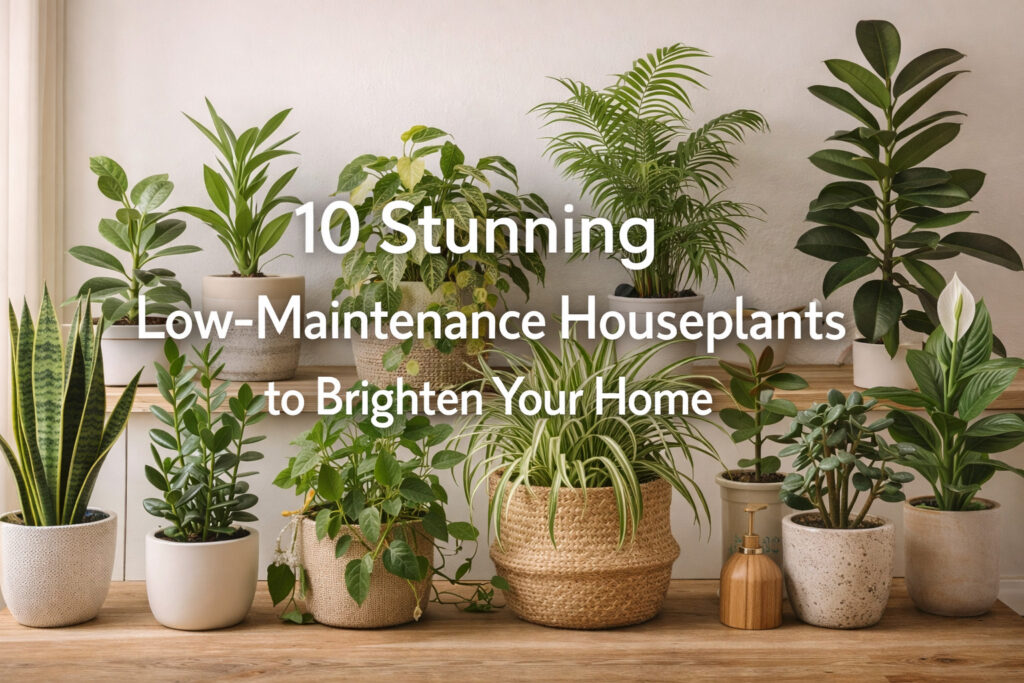

Bringing nature indoors shouldn’t feel like a second job. If you’ve ever brought home a beautiful fern only to have it turn into a crispy brown sculpture within a week, you aren’t alone. The secret to a thriving indoor garden isn’t a magical “green thumb”—it’s choosing the right low-maintenance houseplants.
In this guide, we’ll explore the best unkillable plants, why they are essential for your well-being, and how to style them to transform your home into a sanctuary.
Table of Contents
Why You Need Low-Maintenance Houseplants
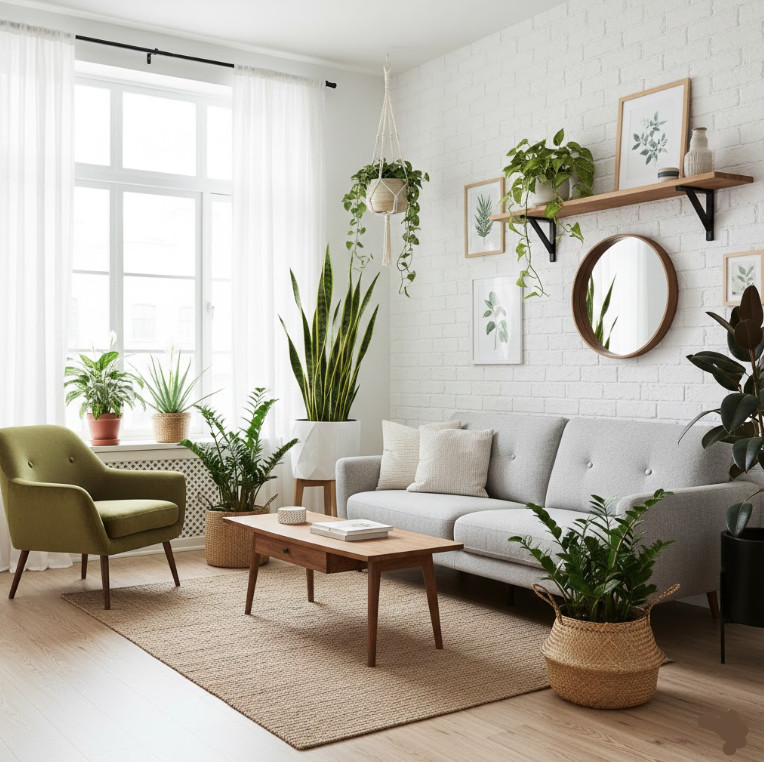
For many, the idea of “plant parenting” is intimidating. Between watering schedules, humidity levels, and light requirements, it can feel overwhelming. However, low-maintenance houseplants are specifically evolved to handle a bit of neglect.
1. Health and Air Quality
Beyond their beauty, plants are functional. Research from NASA and other institutions has shown that certain indoor plants can act as natural air purifiers. They absorb volatile organic compounds (VOCs) like formaldehyde and benzene—toxins often found in common household items like carpets, paints, and cleaning supplies.
2. Stress Reduction
Studies have shown that being around greenery can lower cortisol levels (the stress hormone) and boost productivity. The simple act of looking at a healthy, green leaf can induce a sense of calm.
3. Elevating Your Home Decor
Plants are the “jewelry” of interior design. They soften hard architectural lines and add organic texture to a room. If you’re looking for ways to integrate greenery into your main social spaces, check out our living room decor ideas for inspiration on placement and styling.
The Top 10 Best Low-Maintenance Houseplants
If you want the beauty of a garden with the effort of a plastic plant, these are your best bets.
1. Snake Plant (Sansevieria)
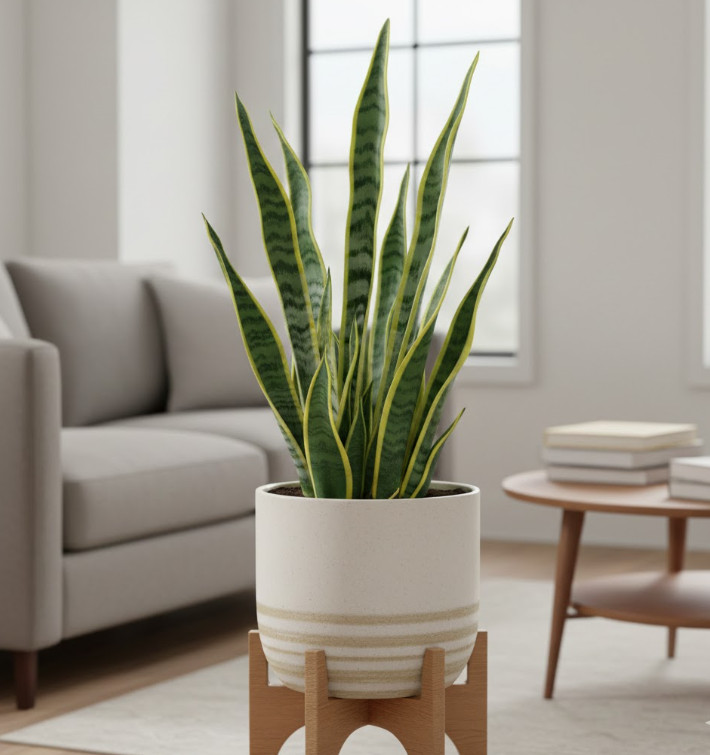
The “indestructible” champion. The snake plant features stiff, sword-like leaves that grow vertically.
- Light: Thrives in everything from low light to bright, indirect sun.
- Water: Every 2–4 weeks. Only water when the soil is bone-dry.
- Bonus: It releases oxygen at night, making it the perfect bedroom companion.
2. ZZ Plant (Zamioculcas zamiifolia)
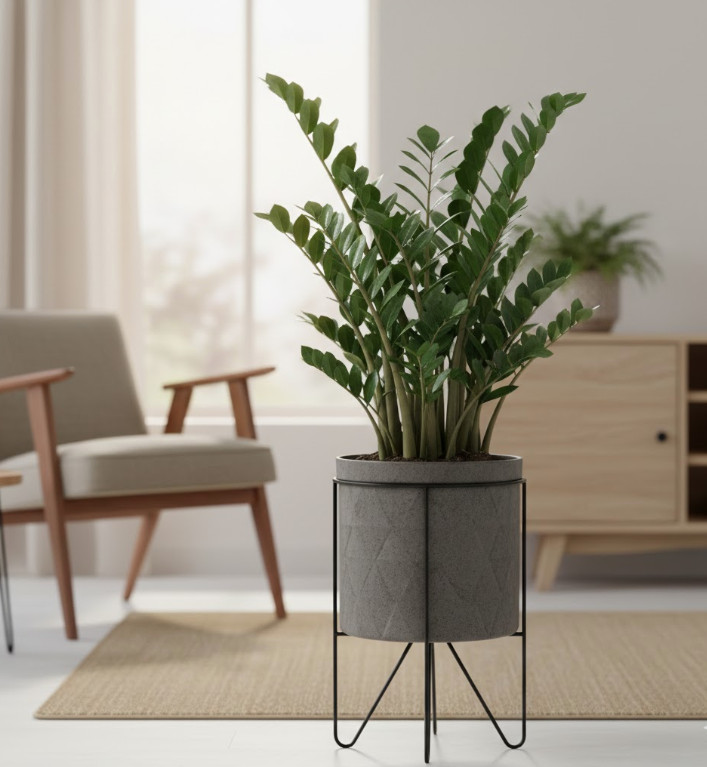
If you have a windowless office or a dark hallway, the ZZ plant is for you. It has waxy, deep green leaves that reflect light.
- Light: Extremely tolerant of low light.
- Water: Once a month. Its thick roots (rhizomes) store water for emergencies.
3. Pothos (Epipremnum aureum)
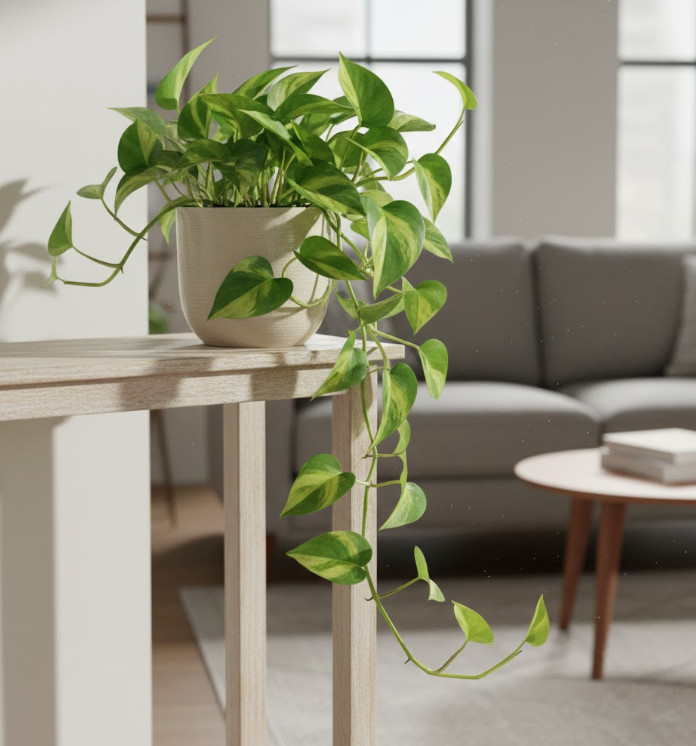
Commonly known as “Devil’s Ivy,” this trailing plant is incredibly fast-growing and hard to kill.
- Light: Prefers bright, indirect light but survives in low light.
- Water: Every 1–2 weeks. The leaves will “droop” slightly when it’s thirsty, giving you a clear visual cue.
4. Spider Plant (Chlorophytum comosum)
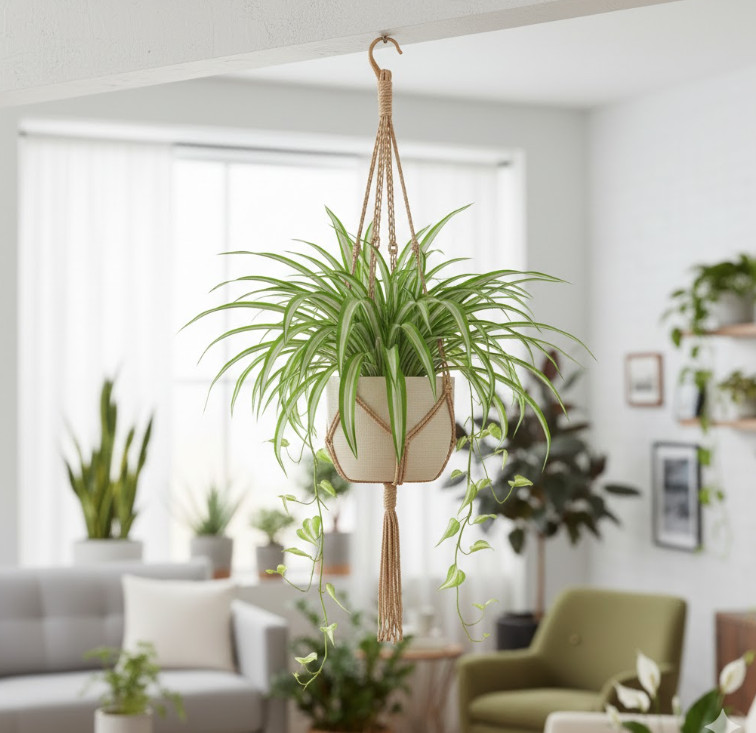
A retro classic that produces “babies” (spiderettes) that hang down from the mother plant.
- Light: Moderate to bright indirect light.
- Water: Once a week. It prefers to stay slightly moist but is very forgiving of an occasional missed watering.
5. Aloe Vera
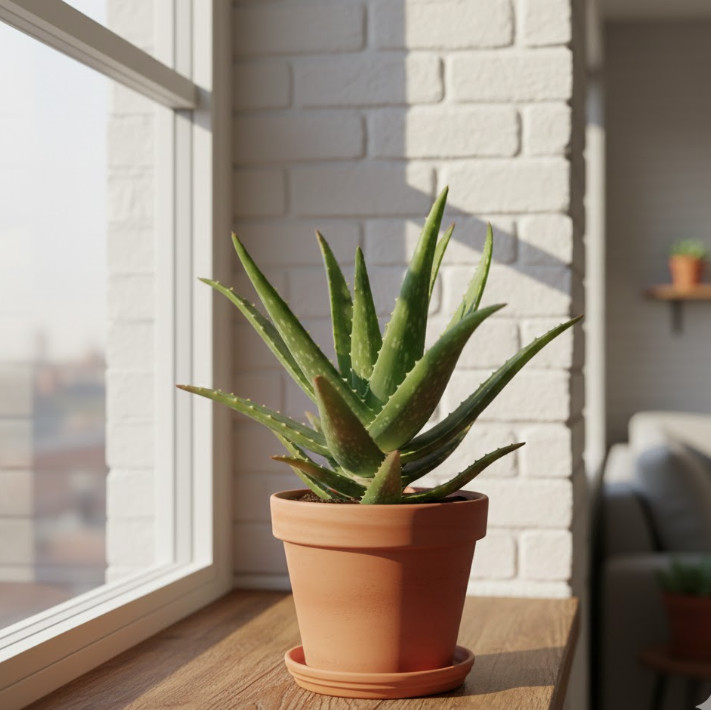
A functional succulent that every household should have.
- Light: Bright, direct light (windowsills are best).
- Water: Every 3 weeks. Like most succulents, it hates “wet feet.”
- Bonus: Use the gel inside the leaves to soothe minor burns or skin irritations.
6. Rubber Plant (Ficus elastica)
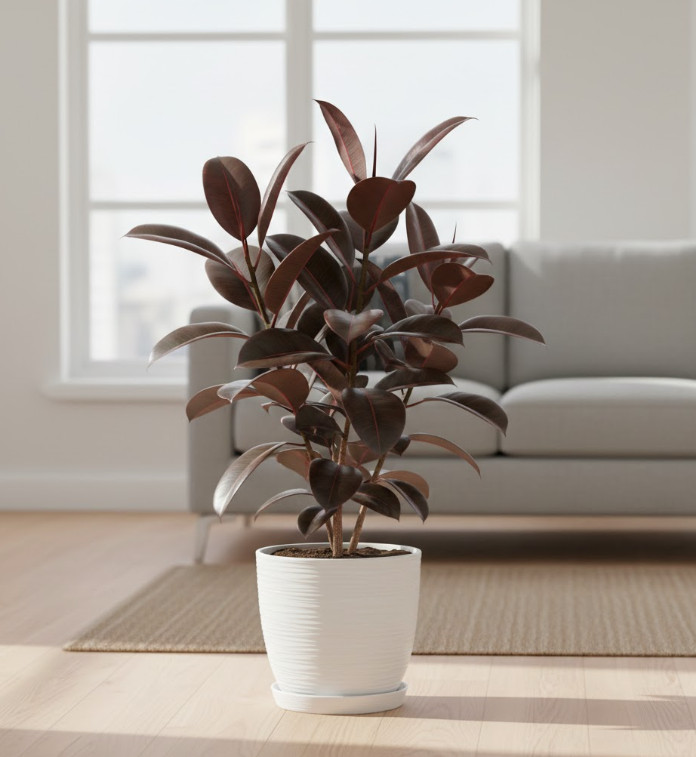
For those who want a plant that feels like a piece of furniture. It has large, glossy, dark-green or burgundy leaves.
- Light: Bright, indirect light.
- Water: When the top two inches of soil are dry.
7. Cast Iron Plant (Aspidistra elatior)
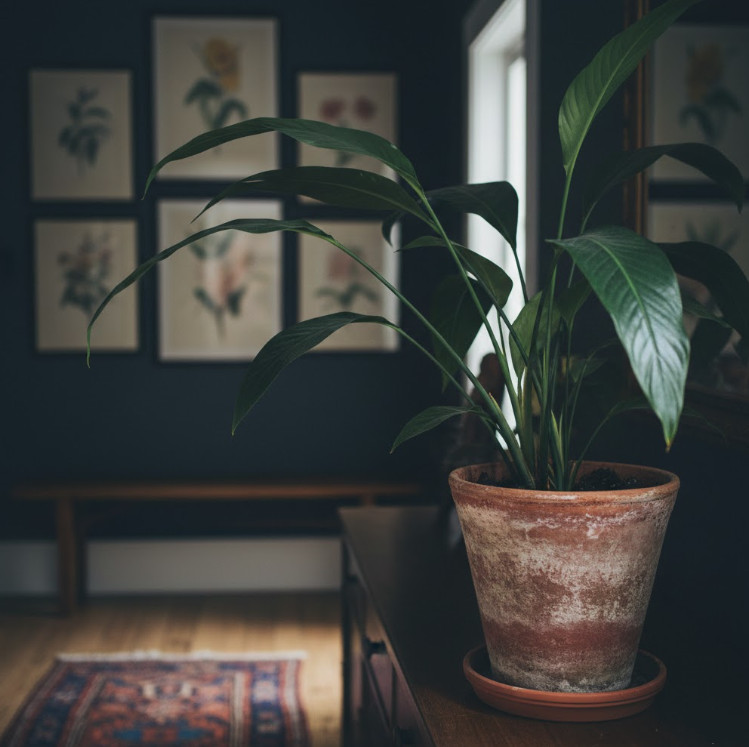
It earned its name by being as tough as cast iron. It can withstand low light, poor air quality, and irregular watering.
- Light: Low to medium light; keep it out of direct sun to avoid leaf scorch.
- Water: Every 10–14 days.
8. Peace Lily (Spathiphyllum)
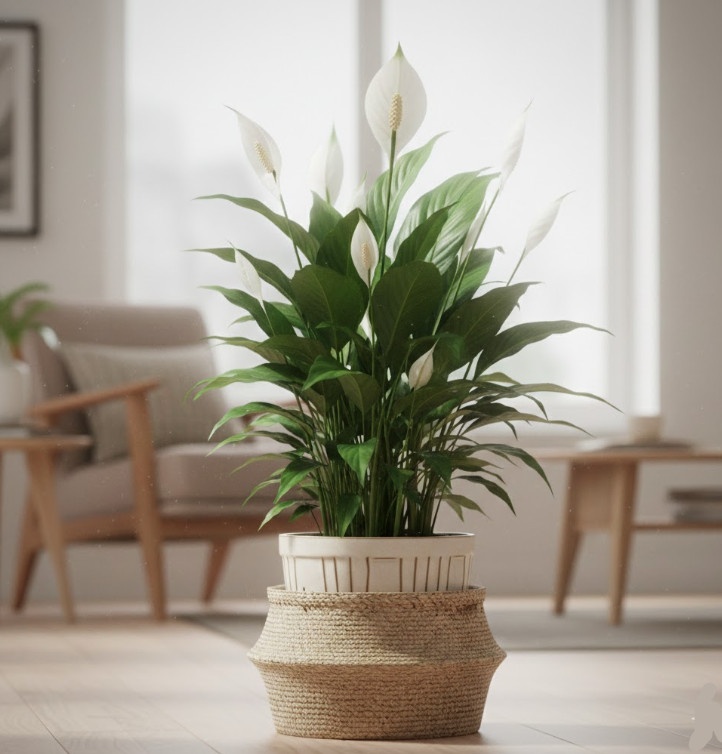
One of the few low-maintenance plants that actually flowers indoors.
- Light: Medium to low light.
- Water: Once a week. It is a “dramatic” plant—it will wilt completely when thirsty, only to perk back up an hour after being watered.
9. Chinese Evergreen (Aglaonema)
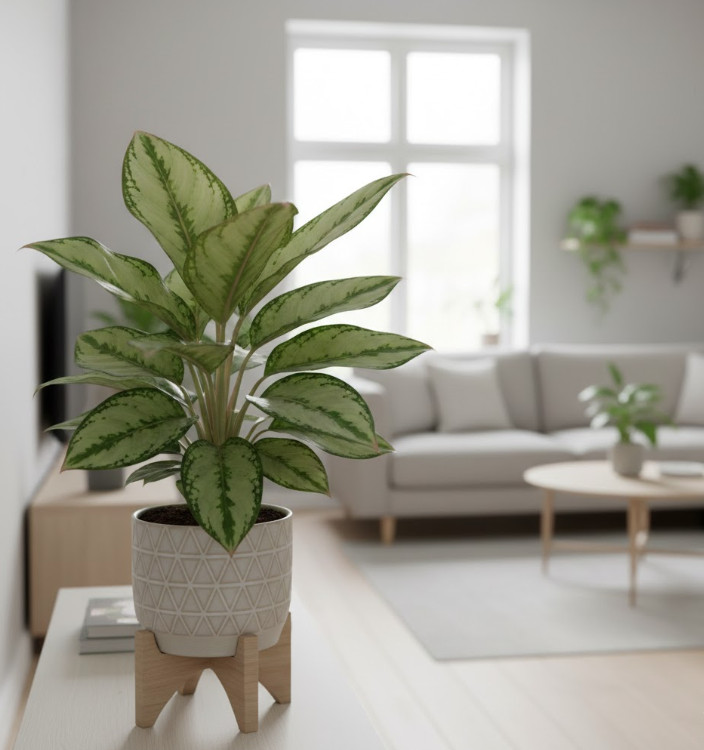
Available in various patterns, including silver, green, and even pink.
- Light: Low to medium light.
- Water: Every 1–2 weeks.
10. Jade Plant (Crassula ovata)
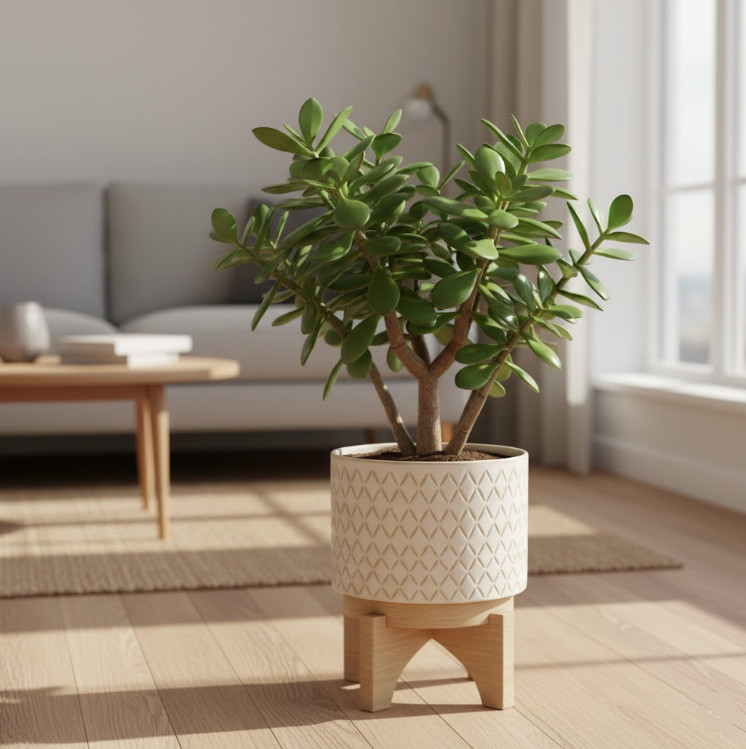
A symbol of good luck, this succulent looks like a miniature tree.
- Light: Full sun to bright indirect light.
- Water: Very sparingly—only when the soil is completely dry.
Environment-Specific Recommendations
Not every house has the same conditions. Choosing a plant that matches your environment is the first step toward success.
| Environment | Best Plants |
| Windowless Rooms | ZZ Plant, Snake Plant |
| Sun-Drenched Windows | Aloe Vera, Jade Plant, Cacti |
| High Humidity (Bathroom) | Peace Lily, Spider Plant, Pothos |
| Pet-Friendly Homes | Spider Plant, Parlor Palm |
5 Foolproof Care Tips for Beginners
Even the most low-maintenance houseplants need a little love. Follow these rules to ensure they stay healthy for years.
1. The Finger Test
Before you reach for the watering can, stick your finger two inches into the soil. If it feels moist, wait. Most indoor plants die from overwatering (root rot), not underwatering.
2. Drainage is Non-Negotiable
Your plant’s roots need to breathe. Always use a pot with drainage holes at the bottom. If you have a decorative “cachepot” without holes, keep the plant in its plastic nursery pot inside the decorative one.
3. Dust the Leaves
In the wild, rain washes away dust. Indoors, dust builds up on leaves, blocking the plant’s ability to photosynthesize. Once a month, wipe the leaves with a damp cloth.
4. Avoid “Light Shock”
Plants are living things that get used to their environment. If you move a plant from a dark corner to a sunny window overnight, it might get “sunburned.” Move them gradually over several days.
5. Fertilize Sparingly
Low-maintenance plants generally don’t need much food. Use a balanced, water-soluble fertilizer once a month during the spring and summer (growing season) and skip it entirely during the winter.
For more foundational advice on creating a cohesive home environment, take a look at our home decor guide.
Styling Your Plants Like an Interior Designer
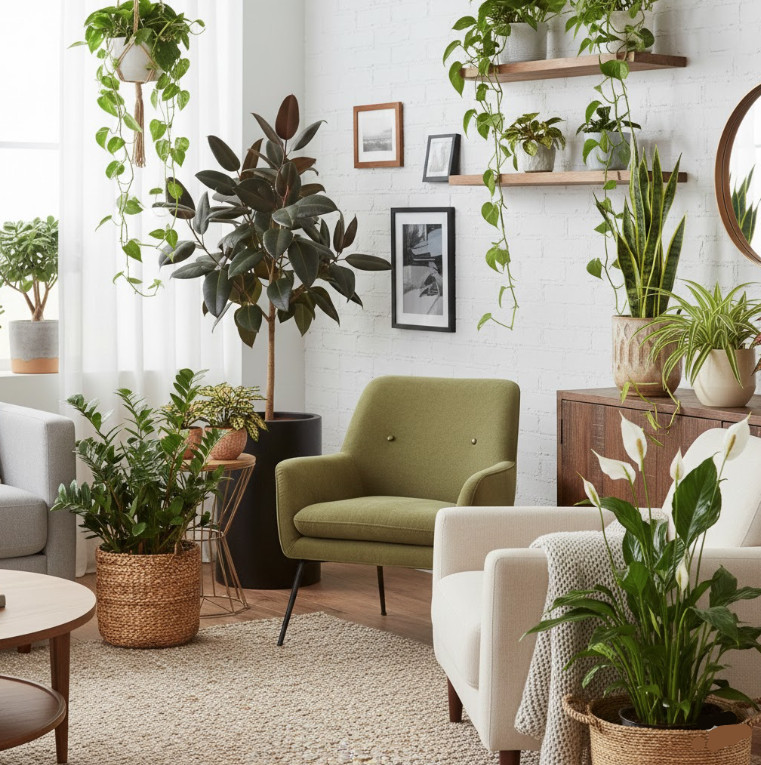
Greenery is more than just a hobby; it’s a styling tool. Here is how to make your plants look intentional rather than accidental.
- Vary the Heights: Use a mix of floor plants (like a rubber tree), tabletop plants (like jade), and trailing plants (like pothos) to create a “layered” look.
- Group in Odd Numbers: Items grouped in threes or fives tend to look more aesthetically pleasing to the human eye.
- Texture Contrast: Pair a “spiky” plant (snake plant) next to a “soft” plant (spider plant) for instant visual interest.
- Use Mirrors: Placing a plant in front of a mirror effectively doubles your greenery and helps bounce light into the plant’s foliage.
Need more inspo? Explore our full collection and transform your home, room decor ideas.
Conclusion
Creating a lush, indoor jungle doesn’t require a degree in botany. By selecting low-maintenance houseplants like the snake plant, ZZ plant, or pothos, you can enjoy all the air-purifying and stress-reducing benefits of nature with minimal effort.
Remember, the goal is to enhance your life, not add to your to-do list. Start with one or two “unkillable” varieties, find the right spot for them, and watch how a little bit of green can completely transform your home’s energy.
Which of these low-maintenance plants are you planning to bring home first? Let us know in the comments below!