
In the fast-paced, digitally saturated world of 2026, our homes have become more than just places to sleep; they are our primary sanctuaries for mental restoration. No design philosophy addresses this need for peace better than Nordic interior design.
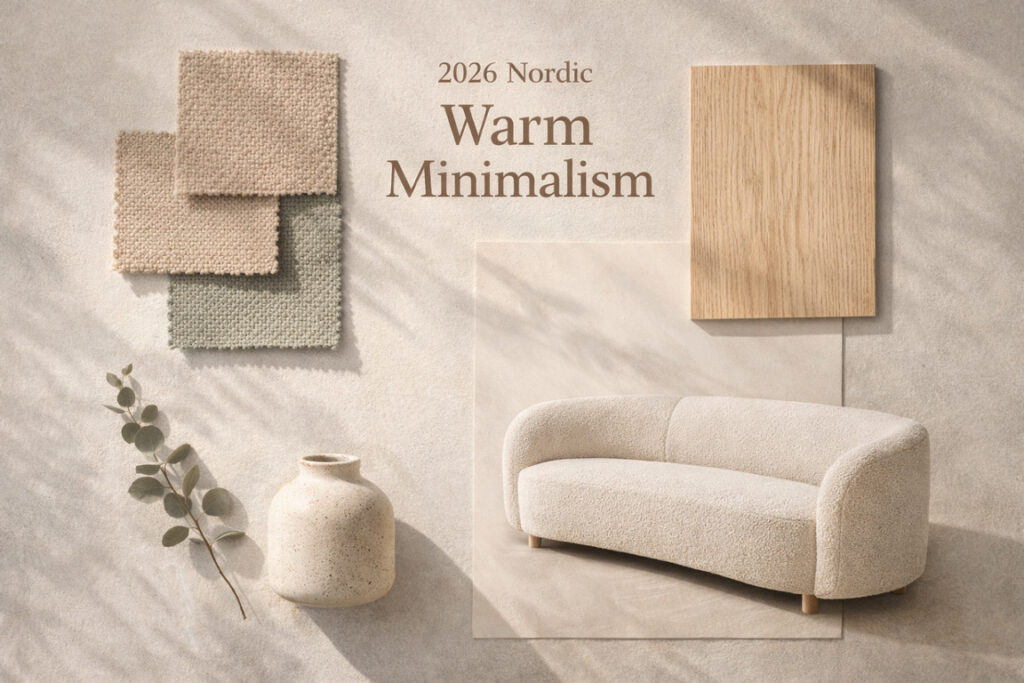
While many people mistake this style for “expensive IKEA furniture,” the true heart of Nordic design is a deeply rooted connection to nature, light, and functional longevity. In this guide, we will explore the evolution of the Nordic aesthetic, the 2026 shift toward “Warm Minimalism,” and how you can transform your home into a high-end sanctuary on any budget.
Table of Contents
Chapter 1: The Evolution of Nordic Design (2026 Perspective)
For decades, “Scandinavian” and “Nordic” were used interchangeably. However, as we move through 2026, the industry has made a clear distinction. While Scandinavian design (Denmark, Sweden, Norway) focused on industrial mass-production and sleek lines, Nordic design (including Finland and Iceland) brings in a more rugged, organic, and “raw” element.
From “Cold” to “Warm” Minimalism
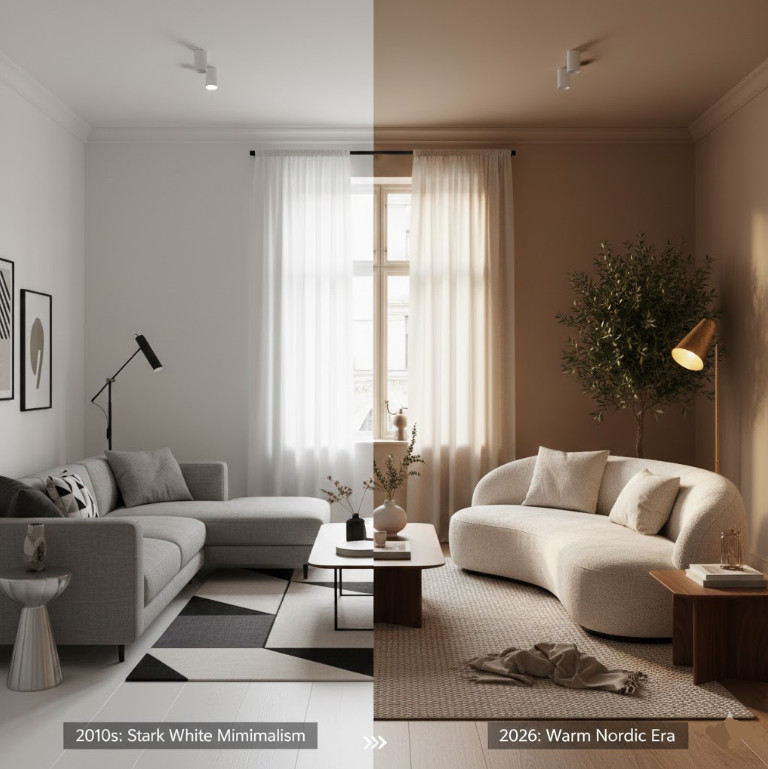
The 2010s gave us “Grey-on-Grey” minimalism—a look that, while clean, often felt sterile. The current era of Nordic design has matured into Warm Minimalism. This shift prioritizes:
- Earthier Tones: Moving away from stark white toward “Greige,” sand, and terracotta.
- Soft Geometry: Replacing sharp 90-degree angles with “pebble” shapes and arches.
- Heritage Sustainability: A focus on buying one high-quality, sustainably sourced piece rather than five seasonal items.
Chapter 2: The Core Pillars of the Nordic Home
To master this look, you must understand the five pillars that support every authentic Nordic space.
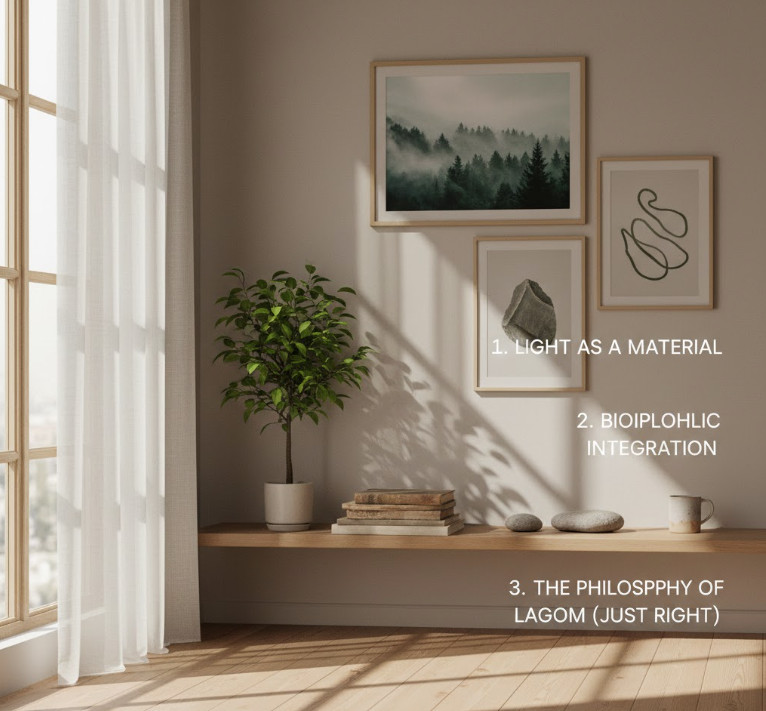
1. Light as a Physical Material
In Northern Europe, where winter days are short, light is treated as a precious resource.
- Reflective Surfaces: Nordic homes use polished wood, glass, and strategically placed mirrors to bounce natural light into every corner.
- The “Big Light” Rule: Authentic Nordic homes rarely use a single overhead light. Instead, they utilize layered lighting. This involves 5 to 7 light sources per room—floor lamps, table lamps, and candles—to create “islands” of warmth.
2. Biophilic Integration
Nordic design is the pioneer of Biophilia (the human desire to connect with nature). In 2026, this means more than just a few houseplants. It involves using raw stone, untreated wood grains, and indoor-outdoor transitions that make the home feel like an extension of the forest or coast.
3. The Philosophy of “Lagom”
Unlike the “More is More” maximalist trend, Nordic design follows Lagom—a Swedish word meaning “just the right amount.” It’s the art of living with only what is necessary, but ensuring those necessary items are beautiful and high-quality.
Chapter 3: The 2026 Nordic Color Palette
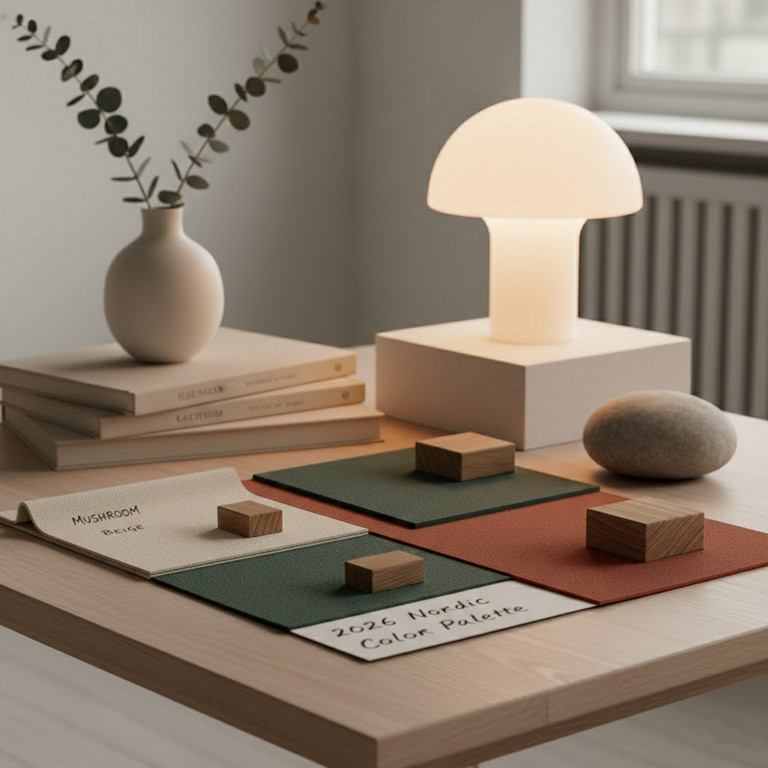
If you want your home to look current, you must move beyond the “All-White” look. Here is the 2026 Nordic palette:
| Tone | Color Name | Purpose |
| Base | Mushroom Beige | Replaces stark white for walls to create warmth. |
| Accent | Midnight Forest | A deep, desaturated green for cabinetry or rugs. |
| Neutral | Weathered Oak | The go-to wood tone for flooring and tables. |
| Warmth | Terracotta Dust | Used in ceramics and textiles to ground the room. |
Chapter 4: Room-by-Room Practical Application
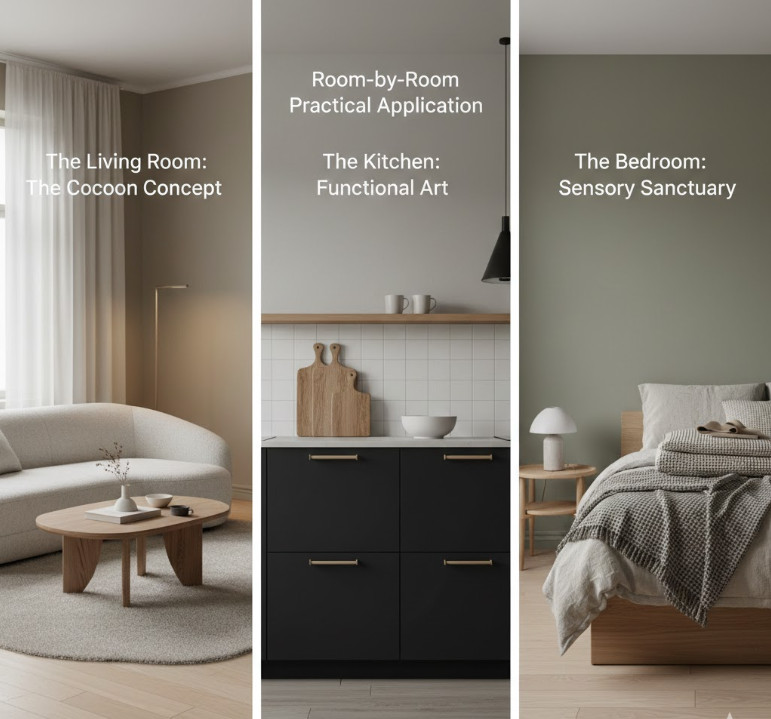
The Living Room: The “Cocoon” Concept
The living room should be a “Cocoon.” Start with a modular sofa in a textured fabric like linen or bouclé. Avoid “sets” of furniture; instead, pair a modern sofa with a vintage wooden armchair.
- The Rug: Choose a high-pile wool rug in an organic, asymmetrical shape.
- The Coffee Table: Look for “nested” tables made of light oak or stone.
The Kitchen: Functional Art
Nordic kitchens are famous for hidden storage. The goal is to keep counters empty.
- Materials: Use matte black hardware against light wood cabinets.
- Open Shelving: Only use open shelving for items you use daily—white ceramic mugs or wooden bowls. If it’s not beautiful, hide it.
The Bedroom: Sensory Sanctuary
The Nordic bedroom is designed for optimal sleep hygiene.
- Textiles: Layering is key. Start with organic cotton sheets, add a linen duvet, and finish with a heavy wool throw.
- The Bed: Low-profile frames (Japandi style) are very popular in 2026, as they create a sense of groundedness.
Chapter 5: Sustainable Luxury and the “Buy Less” Movement
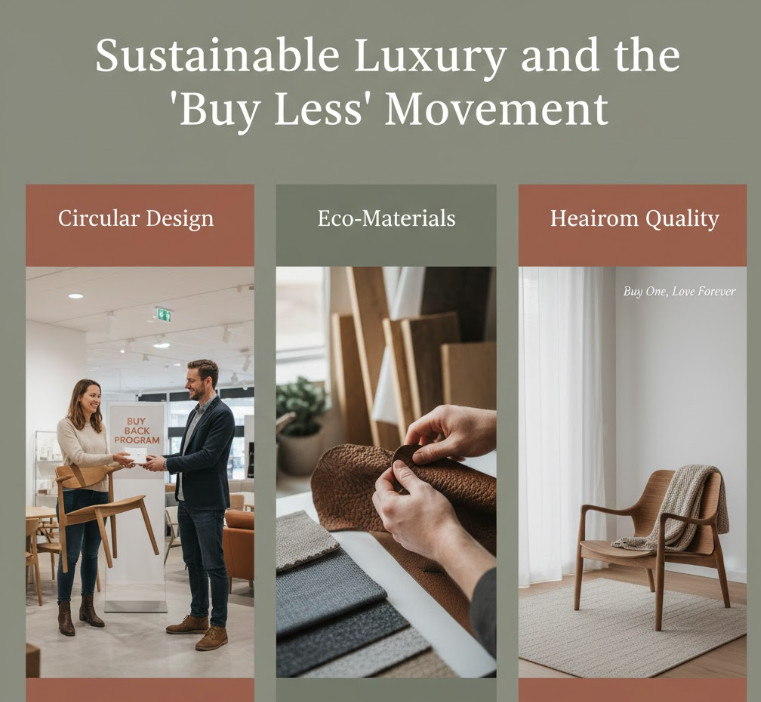
One of the reasons Nordic interior design continues to lead the 2026 trends is its alignment with eco-conscious living.
- Circular Design: Many Nordic brands now offer “Buy Back” programs for their furniture.
- Eco-Materials: We are seeing an increase in furniture made from mushroom leather (Mycelium), recycled fishing nets, and reclaimed “sunken” timber.
Chapter 6: Nordic Design on a Budget
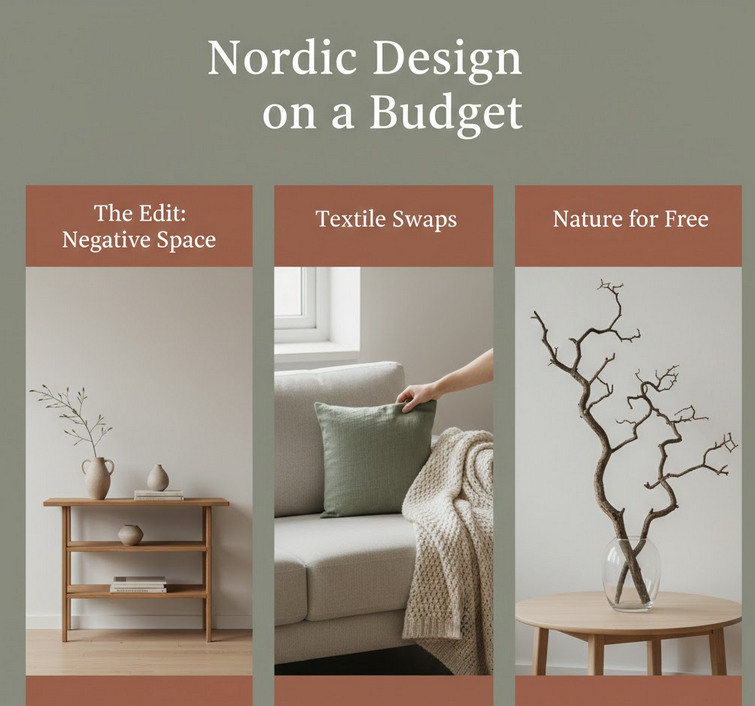
You don’t need a designer budget to achieve this look. Follow these three “High-Impact” rules:
- The “One In, One Out” Rule: Before adding a decor piece, remove one item that creates visual clutter. Nordic design is 50% about what you don’t have.
- DIY Texture: You can “Nordify” a basic IKEA dresser by adding wooden dowels to the front or swapping plastic handles for leather pulls.
- Nature for Free: A large, sculptural branch found on a walk and placed in a glass vase is more “Nordic” than a $200 plastic sculpture.
Nordic Warm Minimalism Shopping List
- Curved Bouclé Accent Chair (Neutral tone)
- Low-profile Light Oak Coffee Table
- Woven Wool Area Rug (Asymmetrical or pebble shape)
- Natural Linen Throw Pillows (Sage and Mushroom tones)
- Rechargeable Cordless Mushroom Table Lamp (Warm LED)
- Set of 3 Minimalist Matte Ceramic Vases
- Organic Cotton Waffle Knit Blanket
- Sheer Linen Window Curtains (Off-white)
- Wall-mounted Oak Picture Ledge
- Large Arched Floor Mirror with Thin Wood Frame
Transforming your home has never been easier. Access our full suite of room decor ideas for endless inspiration
Chapter 7: FAQ (Frequently Asked Questions)
Is Nordic design the same as Japandi?
Not exactly. Japandi is a hybrid style. It takes the rustic, cozy elements of Nordic design and merges them with the traditional, refined elegance of Japanese aesthetics. Nordic design tends to be slightly “cozier” (Hygge), while Japandi is more “minimalist” (Zen).
How do I make a Nordic room feel warm in the winter?
Focus on textural contrast. Pair hard surfaces (wood/stone) with soft surfaces (sheepskin/wool). Use warm-toned LED bulbs (2700K to 3000K) to mimic the glow of firelight.
Can I use dark colors in Nordic design?
Yes! “Nordic Noir” is a popular sub-trend that uses charcoal, deep navy, and black. The key is to ensure there is enough natural light and wood texture to keep the space from feeling “heavy.”
Conclusion: Making it Your Own
Nordic interior design is not a set of strict rules; it is a framework for living better. By focusing on light, nature, and the “Lagom” philosophy, you create a home that doesn’t just look good on Instagram—it feels good to live in.



Pingback: Industrial Home Decor: How To Achieve The Modern Urban Look
Pingback: Guide To Living Room Decor Ideas: Transform Your Home’s Heart
Pingback: Rustic Home Decor: Cozy Ideas To Create A Warm Natural Home
Pingback: Japandi Interior Design: The Perfect Blend Of Japanese And Scandinavian Style