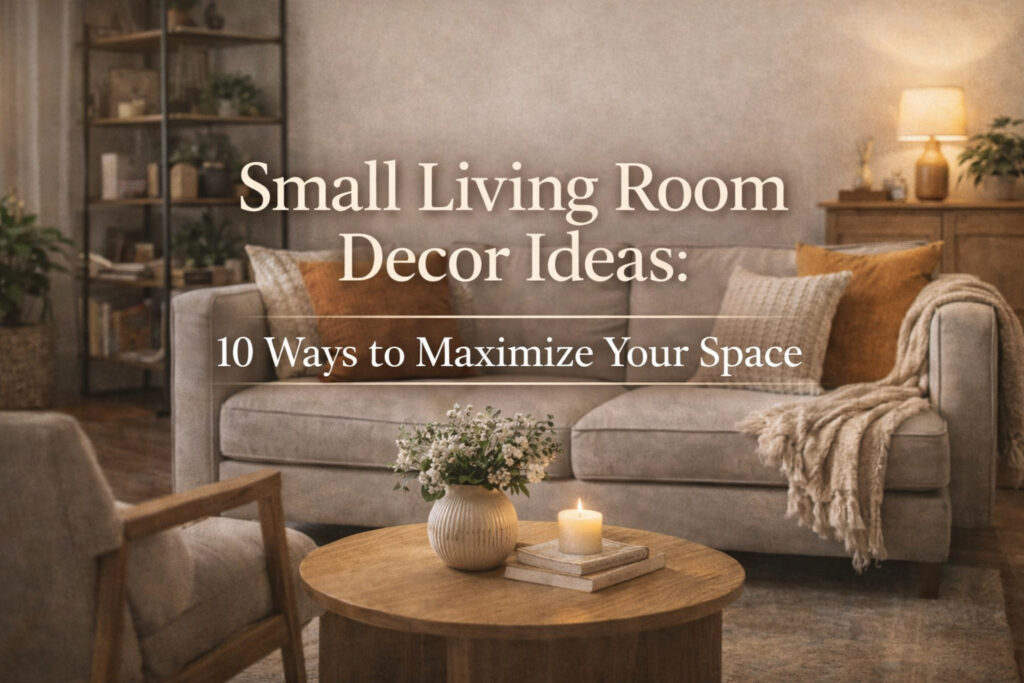

There is a common misconception in the world of interior design: that style requires square footage. We’ve all scrolled through social media feeds filled with cavernous, open-concept lofts and wondered how our cozy (read: tiny) apartments could ever compete.
The truth is, a small living room is not a design “limitation”—it’s an opportunity. Smaller rooms allow for a level of intimacy, curation, and “coziness” that sprawling halls can never achieve. However, without a plan, these spaces can quickly feel cluttered, dark, and claustrophobic.
The secret to mastering small living room decor ideas lies in the balance of visual weight and functionality. You don’t need to knock down walls to make your home feel larger; you simply need to change how the eye perceives the boundaries of the room. In this guide, we’ll dive deep into ten transformative strategies that will turn your cramped quarters into a stylish sanctuary.
Table of Contents
1. Use Light and Neutral Color Palettes to Open the Room
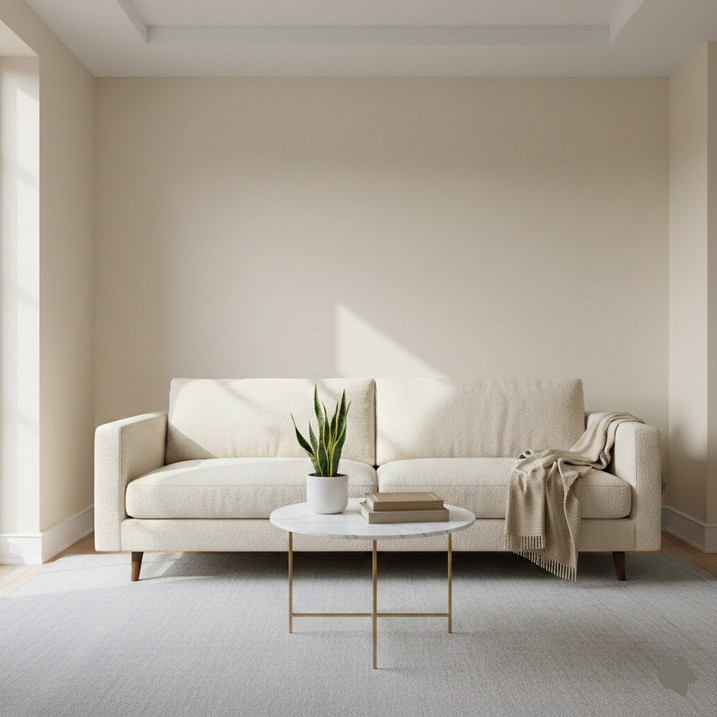
Color is perhaps the most powerful tool in your design arsenal. Dark colors absorb light, making walls feel like they are closing in. Conversely, light colors reflect light, pushing boundaries outward.
The Power of White and Off-White
When looking for small living room decor ideas, start with the “canvas.” Crisp whites, soft creams, and pale greys are your best friends. These shades blur the lines between where the wall ends and the ceiling begins.
Monochromatic Magic
If you want to go beyond basic white, try a monochromatic color scheme. By using different shades of the same color—say, a soft sage green on the walls with a slightly darker olive sofa—you create a seamless visual flow. When there are no harsh contrasts to break up the room, the space feels continuous and expansive.
Pro Tip: The Ceiling “Lift”
A common designer trick is to paint the ceiling the same color as the walls, or even a shade lighter. This eliminates the “horizon line” at the top of the wall, tricking the brain into thinking the ceilings are much higher than they actually are.
2. Strategic Furniture: The “Leggy” Look
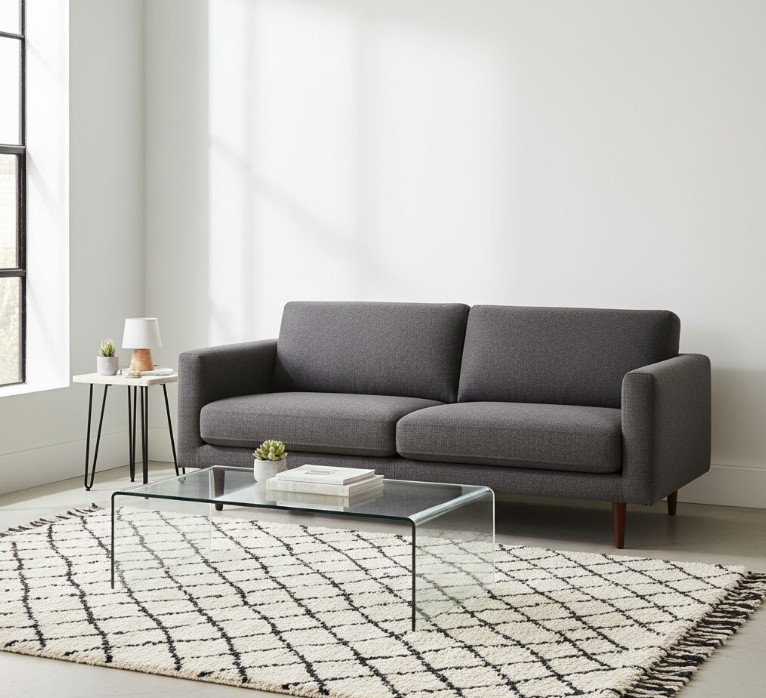
In a small room, floor space is premium real estate. The more floor you can see, the larger the room will feel. This is why “blocky” furniture—like sofas that sit flush against the ground—can be a disaster for small layouts.
Opt for Tapered Legs
When shopping for a sofa or armchair, look for pieces with exposed, tapered legs (Mid-Century Modern styles are perfect for this). Because you can see the floor underneath the piece, the furniture appears to “float,” reducing its visual weight.
Ghost Furniture
Don’t overlook “ghost” materials like acrylic or glass. A glass coffee table or an acrylic “Louis” chair provides the function you need without taking up any visual space. They are effectively “invisible,” allowing the eye to travel right through them to the far corners of the room.
3. Master the Art of Scale and Proportion
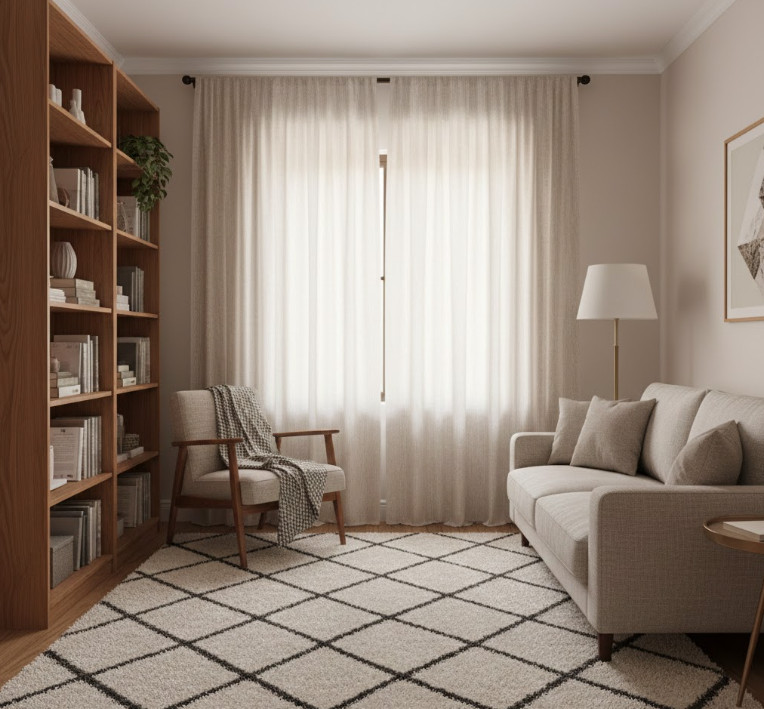
It sounds counterintuitive, but many people make the mistake of filling a small room with small furniture. This results in a “dollhouse effect” where the room feels cluttered with tiny, bitty pieces.
The “One Big Piece” Rule
Instead of two small loveseats, try one generous, well-sized sectional. One large piece of furniture feels more intentional and less cluttered than four or five smaller chairs and stools.
The Rug Rule
Never “skim” on the rug. A small rug floating in the middle of the room makes the floor look like a postage stamp. Choose a rug large enough that at least the front legs of all your furniture sit on it. This defines the seating area as one cohesive zone, making the room feel anchored and expansive.
4. Leverage Vertical Space
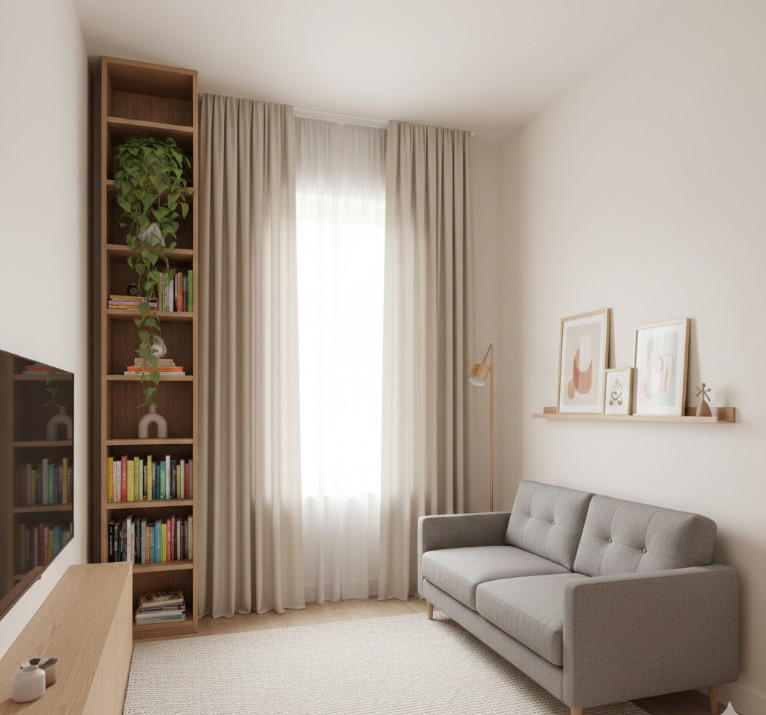
When you run out of horizontal floor space, look up! Most people ignore the top third of their room, but that is where the most “growth” potential lives.
Floor-to-Ceiling Curtains
Hang your curtain rods as close to the ceiling as possible—not right above the window frame. Let the fabric hit the floor. This creates long vertical lines that draw the eye upward, giving the illusion of grand height.
Tall Bookshelves
Instead of wide, squat bookcases, go for narrow, floor-to-ceiling shelving. It provides ample storage for your favorite books and decor while taking up a minimal footprint.
5. The Power of Mirrors and Reflective Surfaces
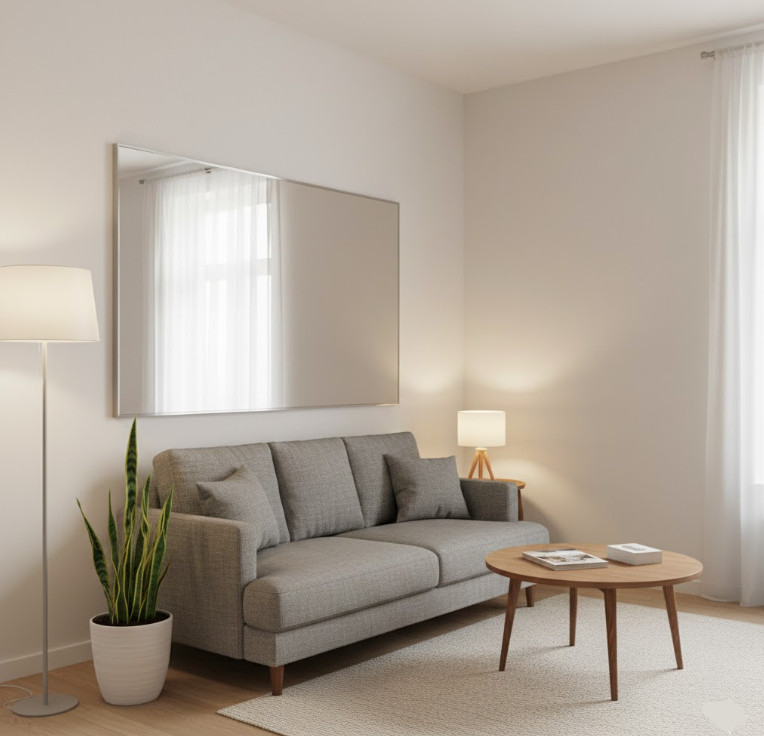
Interior designers have used mirrors to cheat space for centuries. A well-placed mirror is essentially an extra window.
Placement is Everything
Position a large mirror directly opposite your largest window. It will catch the incoming natural light and bounce it back into the darker corners of the room. If you don’t have a large window, place a mirror behind a lamp to amplify the artificial light at night.
Mirrored Furniture
If a giant wall mirror feels too formal, consider a mirrored side table or a tray. These small reflections add “sparkle” and depth without being overwhelming.
6. Smart Storage and Multifunctional Pieces
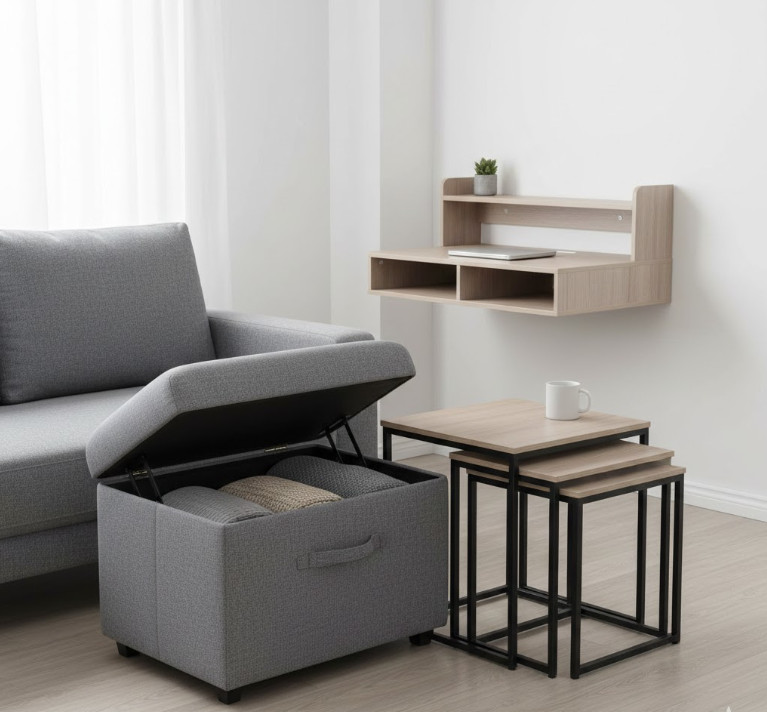
In a small living room, every piece of furniture must “earn” its place. If a piece of decor doesn’t serve at least two purposes, think twice before letting it in.
- Storage Ottomans: Replace a traditional coffee table with a large upholstered ottoman that opens up to store blankets and pillows.
- Nest of Tables: These are perfect for entertaining; pull them out when guests arrive, and tuck them away when you need floor space for your morning yoga.
- Wall-Mounted Desks: If your living room also doubles as an office, a “floating” or fold-down desk can save significant space.
For more inspiration on how to balance aesthetics with functionality in your main gathering space, check out these living room decor ideas to find the perfect aesthetic for your home.
7. Floating Furniture for Better Flow
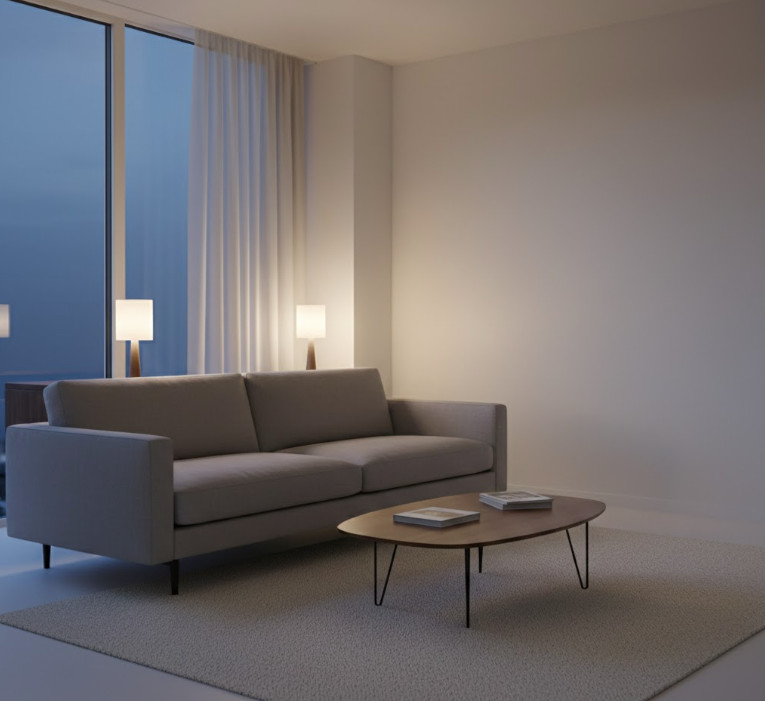
The instinct in a small room is to push every piece of furniture against the walls to create a “hole” in the middle. Ironically, this makes the room feel cramped and highlights the small dimensions.
Create “Breathing Room”
Try “floating” your sofa even just three to four inches away from the wall. This creates shadows and depth, suggesting that the room continues beyond the furniture. If you have the space, placing a slim console table behind a floating sofa can provide a surface for lamps and drinks without needing bulky side tables.
8. Lighting Layers: Beyond the “Big Light”
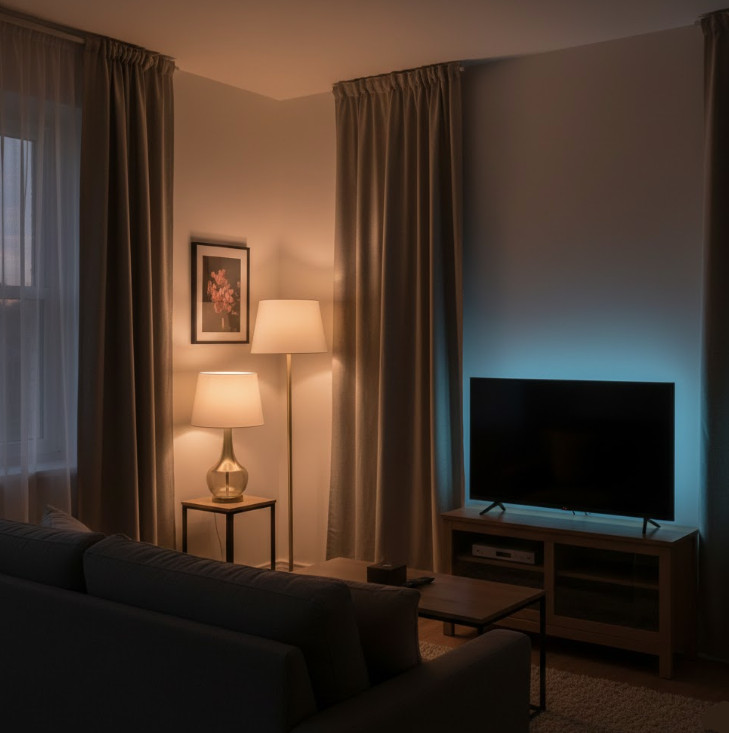
Nothing kills the vibe of a small room faster than a single, harsh overhead light. It creates shadows in the corners, which visually “shrinks” the room.
The Three-Point Rule
Aim for at least three sources of light in the room:
- Ambient: Your overhead light (preferably on a dimmer).
- Task: A reading lamp next to the sofa.
- Accent: LED strips behind the TV or a small “up-light” in a corner with a plant.
By illuminating the corners and varying the height of your light sources, you eliminate shadows and make the space feel airy and warm.
9. Bringing in “Living” Decor
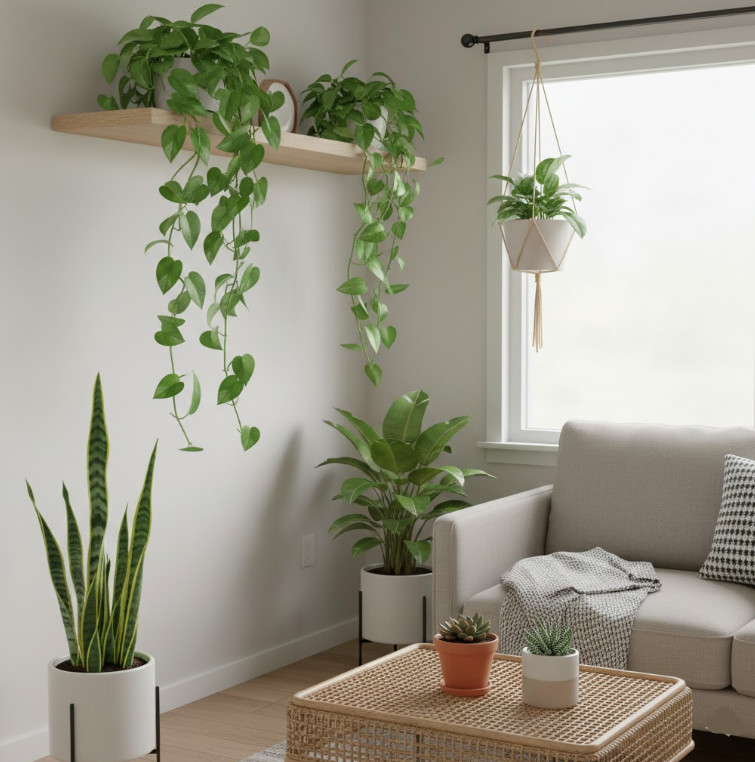
Plants are a secret weapon for small living room decor. They add texture and life without feeling like “clutter.”
Vertical Greenery
If you don’t have room for a potted fiddle-leaf fig on the floor, go vertical. Use hanging planters or “wall pockets” to bring greenery to eye level. A trailing Pothos on a high shelf creates a “waterfall” effect that adds movement and softness to the sharp angles of a small room.
10. Curate, Don’t Just Decorate
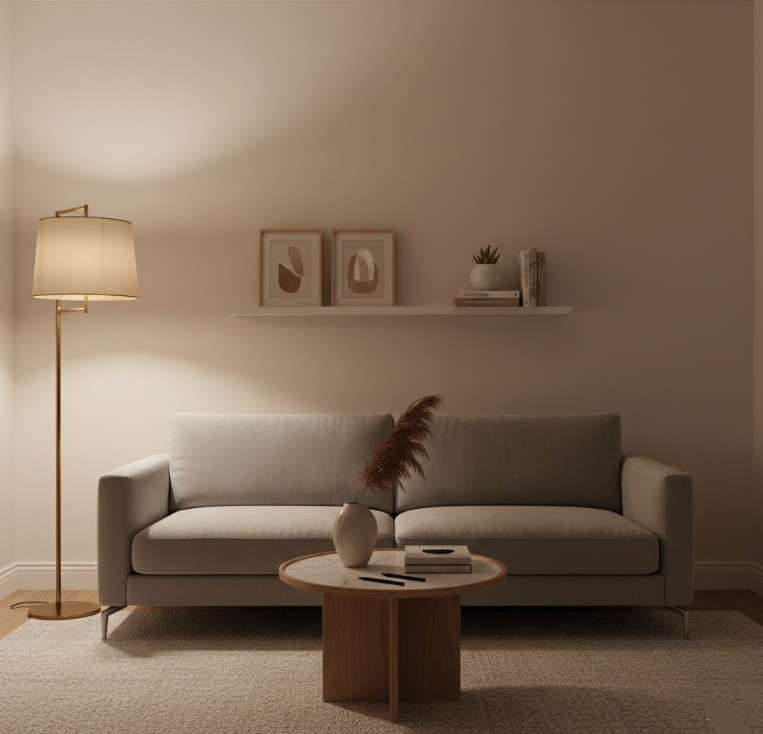
The biggest enemy of a small room is “visual noise.” Too many small knick-knacks, a pile of mail on the table, and mismatched pillows can make the room feel like it’s closing in.
The “One In, One Out” Rule
To keep your small living room decor ideas looking fresh, adopt a strict curation policy. If you buy a new coffee table book, donate an old one. Keep surfaces relatively clear—allow for some “negative space” where the eye can rest.
Seeking a total home refresh? Peruse our room decor ideas interior to elevate every living space
Conclusion: Small Space, Big Impact
Decorating a small living room is a masterclass in intentionality. It forces you to choose pieces you truly love and layouts that actually work for your lifestyle. By focusing on light, scale, and multi-functional furniture, you can transform a “cramped” space into a curated masterpiece.
Remember, your home should be a reflection of your personality, not just a collection of furniture. Take these ideas, experiment with your layout, and don’t be afraid to break the rules until it feels like you.
What is your biggest challenge when decorating a small room? Is it the layout, the storage, or choosing the right colors? Let us know in the comments below!



Pingback: The Beige Home Aesthetic: Master Warm Minimalism In 2026